
The beam you choose shapes more than the look of your patio and carport project. It decides how far you can span between posts, how much you pay, and how much of what you buy ends up as offcut. Steel and aluminium both have their place, and the right choice depends on your project.
This guide compares Ausdeck’s Shurelock steel beams with Ausdeck’s aluminium beams, so you can see where each one comes out ahead.
A lightweight beam has to do two things: be easy to handle on site and carry the load your project puts on it. Steel and aluminium beams get there in different ways.
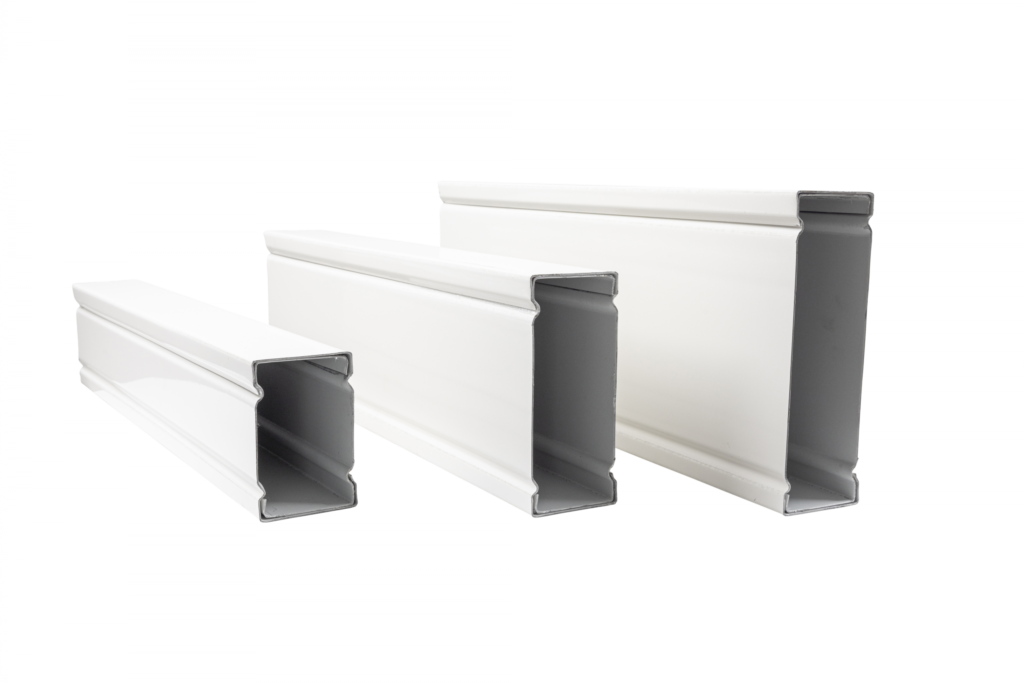
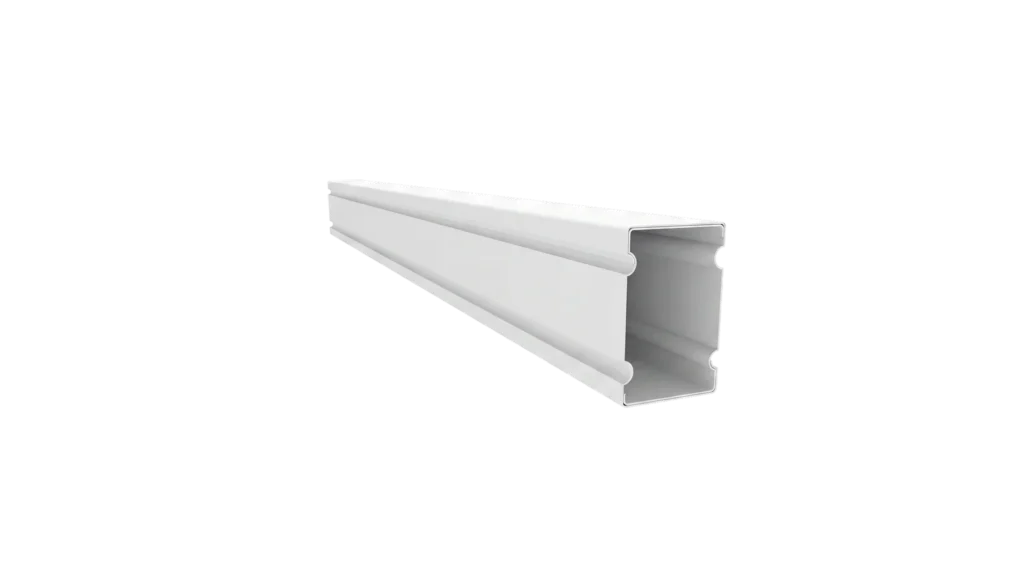
Aluminium is roughly half the weight of steel per metre at the same depth, which makes it easier to handle and install. Ausdeck’s Shurelock lightweight beams take a different approach: two interlocking high-tensile steel sections with 1.0 mm walls (100 beam) or 1.2 mm walls (150 and 200 beams). Where the top and bottom flanges overlap, this doubles to 2.0 mm or 2.4 mm. Aluminium, by comparison, needs a 3.0 mm wall to do a similar job, so the Shurelock beam delivers its performance far more efficiently.
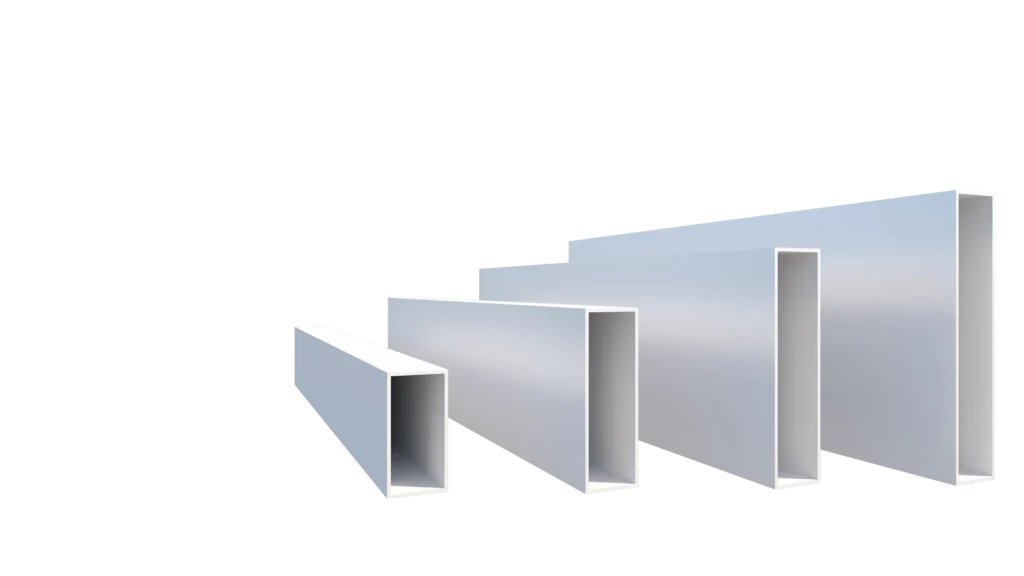
Check the width of the beam as well as the depth when comparing sizes. Shurelock beams are 65 mm wide and aluminium beams are 50 mm, so beams of the same depth are not the same section.
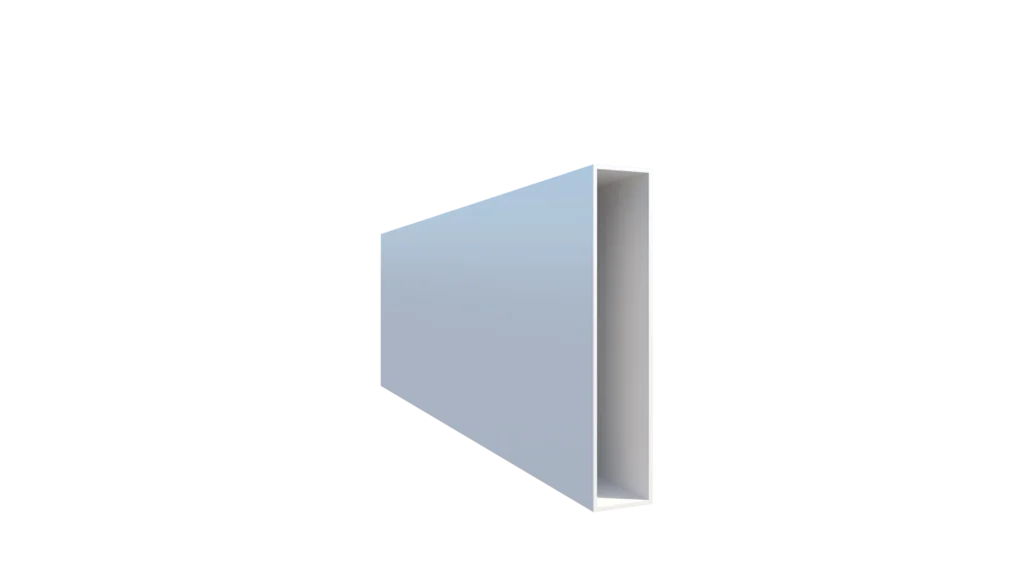
| Specification | Shurelock steel | Aluminium |
|---|---|---|
| Sizes (mm) | 100 x 65, 150 x 65, 200 x 65 (plus a C195 insert for the 200) | 100 x 50, 150 x 50, 200 x 50, 250 x 50 |
| Wall thickness | 1.0 mm (100 beam), 1.2 mm (150 and 200 beams), ~2.0 mm to 2.4 mm on overlapping sections | 3.0 mm (100 – 250 beams) |
| Weight, 150 beam | approx. 5.91 kg/m | approx. 3.14 kg/m |
Steel is well suited to patio and carport frames because it gives you strength without needing a large beam section. Shurelock beams use G550 high-tensile steel, rated at 550 MPa. The 6061-T6 aluminium alternative is rated at 241 MPa. That makes G550 steel roughly 2.3 times stronger and about 3 times stiffer than 6061-T6 aluminium, and stiffness is what stops a beam from sagging.
That stiffness shows up as span. At the same depth, Shurelock spans further than aluminium, and its maximum span is greater too.
| Specification | Shurelock steel | Aluminium |
|---|---|---|
| 150 beam span (N2 wind rating, roof load width of 3.0 m, walls to one side) | 6.55 m | 4.73 m |
| Maximum span (N1 wind rating, roof load width of 1.2 m, walls to one side) | 12.7 m (200 beam with C195 purlin insert) | 8.0 m (250 beam) |
| Cantilever | 900 to 1500 mm (200 beam with C195 purlin insert) | Not covered by the aluminium certificate |
Shurelock beams use two steel sections that interlock to form the beam. This construction provides the strength of high-tensile steel while keeping the overall design relatively lightweight. All our beams are engineered to suit Australian Standards.
When comparing patio beams, it’s worth looking beyond the material itself and thinking about what matters most to you: looks, connections or cost.
Looks
Aluminium beams are extruded in one piece, which gives a seamless finish with very consistent dimensions and crisp, clean lines (perfect for modern architecture). They suit homeowners who are most concerned about appearance. Shurelock steel beams are roll-formed from two interlocking pieces into a contoured profile, and are manufactured to tolerances that suit Ausdeck’s brackets and connections. They suit those who are more concerned about performance.
Connections
Steel has a wider range of accessories and uses conventional bolts, brackets and connections. Aluminium has fewer accessories and needs specialised fasteners and connection details to manage galvanic corrosion and thermal expansion. Aluminium expands about twice as much as steel with temperature changes. On an 8-metre beam with a temperature swing of 40°C, aluminium moves about 7 mm and steel about 4 mm, so aluminium connections need to allow for that movement. For either beam, use the brackets, connectors and fasteners designed for that product to get its full life and performance.
Cost and waste
Steel is the more cost-effective option, delivering more performance from the same size section. At current pricing, the 150 beam in Shurelock is about 20% cheaper per lineal metre than the 150 beam in aluminium, and the saving grows on longer spans where aluminium needs a bigger beam or an extra post. Shurelock beams are also rolled to the exact length your project needs, so there’s less waste on site. Aluminium beams come in set stock lengths, so you may pay for an offcut that ends up as waste.
| Property | AZ150 G550 steel | 6061-T6 aluminium |
|---|---|---|
| Strength and stiffness | Higher – rated at 550 MPa | Lower – rated at 241 MPa |
| Corrosion | Requires protective coating | Naturally corrosion resistant |
| Coastal environments | Marine-grade coating required to suit coastal applications | Better suited to coastal environments |
| Thermal movement | Lower (about 4 mm for a swing of 40°C on an 8-metre beam) | Approximately twice that of steel (about 7 mm) |
| Material cost | About 20% cheaper per metre at current pricing (150 beam) | Higher material cost but lower installation effort |
| Lengths and waste | Made to the exact length needed | Set stock lengths, with possible offcut waste |
| Appearance | Contoured profile | Seamless, continuous profile |
| Manufacturing tolerances | Length ±10 mm, width +1.5/−1 mm, height +3/−1 mm | Very consistent dimensions from extrusion |
| Maintenance | May require touch-ups of damaged coatings | Generally requires less ongoing maintenance |
| Sustainability | Highly recyclable and typically contains recycled content | Higher embodied energy to produce but highly recyclable |
| Connections | Conventional bolts and brackets | Specialised fasteners and connection details required |
| Engineering | More pre-engineered designs | Fewer pre-engineered designs |
Your patio beam is only one part of the structure. Patio posts and connections also need to suit the project.
Ausdeck supplies aluminium and SHS posts for patio and carport applications, with different sizes, thicknesses and colours available for various structural and aesthetic requirements. Where aluminium meets steel, isolation between dissimilar metals is important to reduce the risk of galvanic corrosion.
Corrosion protection is particularly important in coastal environments. Aluminium naturally resists corrosion and is better suited to them.
Ausdeck offers Marine Plus, a marine coating option, for Shurelock steel beams. However, steel relies on its protective coating, which cuts, holes or scratches can compromise.
The coastal comparison therefore isn’t simply aluminium versus steel. With steel, the protective finish and site exposure also matter.
There’s no single answer for every patio and carport.
Steel suits projects where you prioritise:
Aluminium suits projects where you prioritise:
Your span, loads, location, corrosion exposure, appearance, connections and installation requirements all need consideration before selecting a patio beam.
Ausdeck Advice: Steel is generally the more structurally efficient option. It is stronger and stiffer, spans further at the same depth, and typically costs less per metre, with the savings growing on longer spans. Aluminium has the advantage when weight and corrosion resistance are priorities, particularly in coastal areas, and it gives a clean, seamless finish. The trade-off is that it generally needs larger sections and more careful connection detailing.
There’s no single beam for every project. Shurelock beams use high-tensile AZ150 G550 steel in a two-piece interlocking construction, while Aluminium beams are extruded in one piece. Both are designed for patios, carports, awnings and walkways.
Ausdeck’s Shurelock lightweight beams are suited to commercial patios, carports, awnings and walkways, and are available in 100 x 65 mm, 150 x 65 mm and 200 x 65 mm to suit different spans and loads. Made from high-tensile AZ150 G550 steel, they’re engineered and tested for Australian conditions, giving commercial projects a durable, low-maintenance option for outdoor structures.
Lightweight beams reduce handling effort during installation while providing the structural performance required for the application. Aluminium is roughly half the weight of steel per metre at the same depth, while Shurelock combines lightweight construction with high-tensile steel.
G550 steel is roughly 2.3 times stronger and about 3 times stiffer than 6061-T6 aluminium, so at the same depth it spans further. Aluminium is roughly half the weight per metre and naturally corrosion resistant, but it needs thicker walls and generally larger sections to do a similar job.
Aluminium beams top out at 8.0 m (using the 250 mm beam). The Shurelock 200 mm beam with a C195 purlin insert reaches 12.7 m, with cantilevers of 900 to 1500 mm, which the aluminium certificate doesn’t cover. The width and wind category of your outdoor structure will determine your maximum spans.
Ausdeck’s steel and aluminium beams are engineered for Australian conditions and designed for residential and light commercial outdoor structures. Standard and Marine Plus steel finishes provide options for different environmental conditions.
At current pricing, the 150 mm beam in Shurelock is about 20% cheaper per metre than the 150 mm beam in aluminium. The saving grows on longer spans, where aluminium needs a bigger beam or an extra post. Shurelock beams are also made to the exact length your project needs, while aluminium comes in set stock lengths, so you may pay for an offcut that ends up as waste.
Planning your next patio or carport? The right beam starts with your project requirements. Contact Ausdeck for product advice or request a quote based on your patio or carport requirements.